

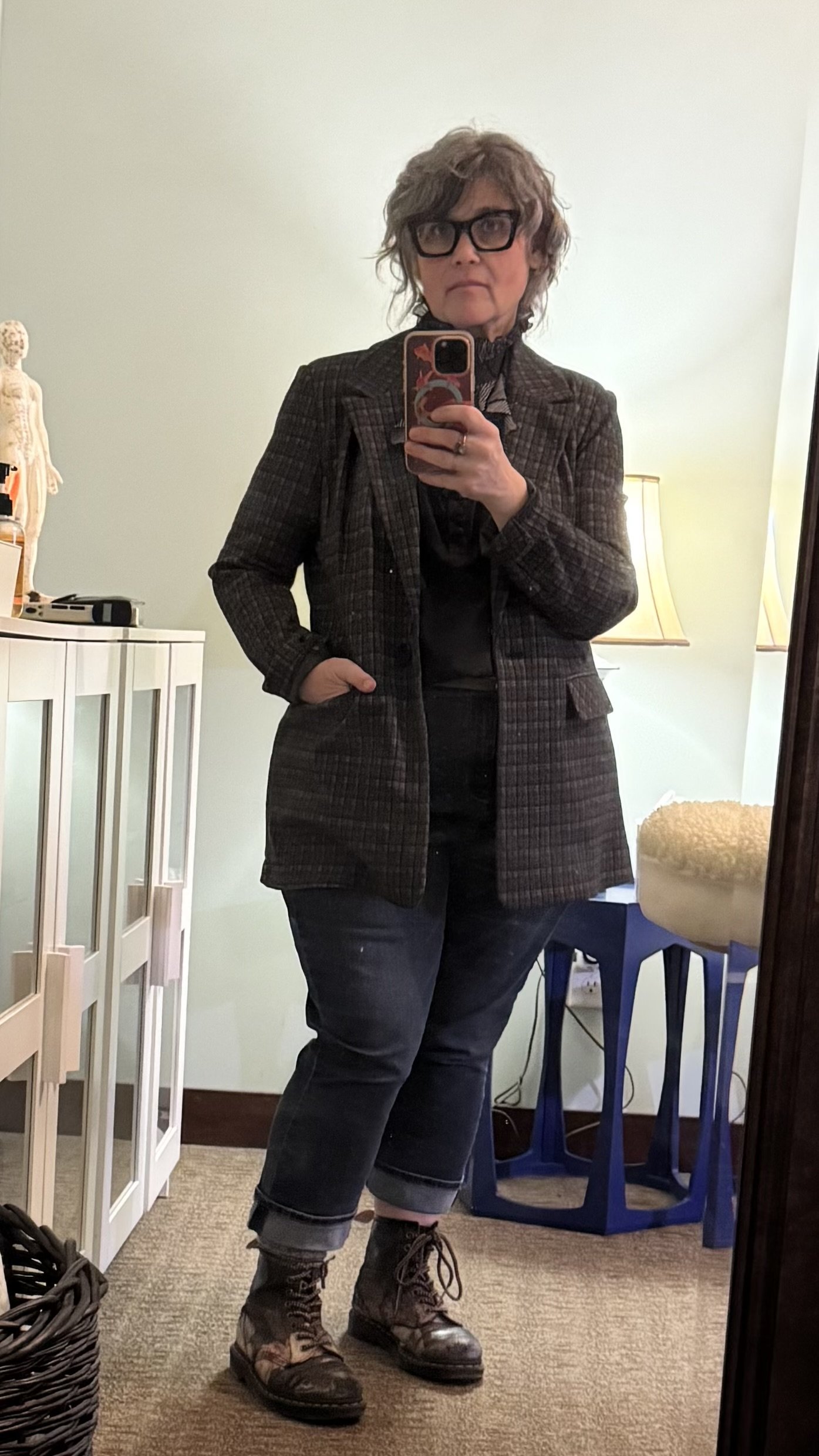
A snapshot of me at the office. Sadly without my lab coat of many pockets.
The time problem in primary care is measurable — and it has consequences
There is an uncomfortable arithmetic at the center of American primary care. A 2023 study published in JAMA Health Forum — one of the most rigorously peer-reviewed medical journals in the country — analyzed over 8 million primary care visits and found a direct association between shorter appointment length and poorer clinical decision-making. As visit time decreased, physicians were significantly more likely to prescribe antibiotics inappropriately for respiratory infections, and to co-prescribe opioids and benzodiazepines simultaneously — a drug combination that substantially elevates overdose risk. The patients receiving the shortest visits were disproportionately Black, Hispanic, and publicly insured. Time, the study made clear, is not a neutral resource in medicine. Who receives it, and how much, shapes clinical outcomes in ways that are concrete and measurable.
Separately, research estimates that a primary care physician would need approximately 27 hours each day to fully address the chronic disease prevention and management needs of their entire patient panel — on top of the acute concerns that bring people in. The average individual visit runs about 18 minutes. Together, these numbers describe a system that is structurally unable to deliver the depth of care that patients need and that physicians want to provide. The gap between what good medicine requires and what the system allows is not a scheduling inconvenience. It is a structural condition with direct consequences for patients.
It is important to be clear about what this means — and what it does not mean. The physicians working within this system are not indifferent to its failures. Most of them entered medicine with a deep commitment to their patients and grieve the limitations that the current model imposes on their practice. Dr. Atul Gawande, surgeon and longtime staff writer for The New Yorker, has written extensively about this tension: the recognition, increasingly urgent in medicine, that regular, sustained, longitudinal care — care that accumulates knowledge of a person over time — is among the most powerful tools available in modern medicine, and yet is precisely the thing the system is least equipped to support. The problem is not the physicians. The problem is a structure that asks them to do more, faster, with less.
One consequence of this structure is that patients have had to adapt. Many arrive at appointments having already pre-edited their own experience — softening complaints, abbreviating history, calibrating how much they share against the perceived risk of being labeled "difficult" or dismissed. They have taken on the work of triaging their own symptoms, checking their own prescription interactions, and managing information across providers who may not communicate with one another. This is an enormous and largely invisible burden, and it exists because the system has not been able to carry it.
The connection between time and trust in clinical settings is not merely intuitive — it is documented. A 2024 study in the Journal of General Internal Medicine, titled pointedly "Good Care Is Slow Enough to Be Able to Pay Attention," examined how time scarcity in primary care directly contributes to patient safety failures. A separate qualitative study of patients described the experience of hurried appointments in stark terms: patients used words like "assembly line" and "conveyor belt" to characterize their care, and reported that feeling rushed left them with a pervasive sense of not mattering. Critically, these patients equated feeling safe with being listened to — with not being hurried, dismissed, or made to feel that their concerns were trivial. When that experience was absent, they did not merely feel dissatisfied. They felt unsafe. This distinction matters enormously, because the physiological consequences of that felt unsafety are real and measurable.
What happens in the body when a patient feels safe
There is a compelling body of research examining what occurs physiologically when a person feels genuinely safe in a clinical encounter — and conversely, what happens when they do not.
Put plainly: when a patient is in a state of chronic stress — including the low-grade, ambient stress of feeling unseen, unheard, or unsafe in their own healthcare — their nervous system and immune system pay a price. The fight-or-flight activation that accompanies uncertainty, fear, and helplessness is not merely a psychological experience. It is a physiological one, with downstream consequences for inflammation, immune regulation, pain sensitivity, and the body's capacity to respond to treatment. Ask anyone who has had to take on the job of managing a chronic condition and they will be able to tell you just such “downstream" consequences” feel like.
The inverse is also true. Research on what is known as the therapeutic alliance — the quality of trust and collaboration between a patient and their provider — consistently finds that a strong therapeutic relationship is one of the most robust predictors of positive clinical outcomes, independent of the specific treatment modality. A landmark 2023 meta-analysis published in World Psychiatry, drawing on decades of research, confirmed that the alliance between clinician and patient is a reliable predictor of treatment outcomes across diverse clinical contexts. When patients feel genuinely known by their provider — when they trust that the person across from them holds a complete and accurate picture of who they are and what they are experiencing — something measurable shifts, both psychologically and biologically.
Time, conversation, and the conditions for clinical skill to work
I am an acupuncturist practicing in downtown Milwaukee. I treat the full range of what brings people through a clinical door — pain, fatigue, sleep disorders, digestive conditions, stress-related illness, hormonal imbalance, immune dysregulation, and the many subclinical complaints that fall between diagnostic categories and never quite resolve.
A first visit with me is not a fifteen-minute intake. It is a comprehensive clinical conversation — about your presenting complaints, your health history, your sleep, your digestion, your stress load, and the patterns in your body that you may have been living with for years without a framework for understanding them. That conversation is not supplementary to the medicine. It is part of the medicine. The detail gathered in that time directly shapes the treatment plan, the point selection, and the clinical strategy. A practitioner who understands the full picture of a patient — not just their primary complaint, but the constellation of factors that surround it — is better equipped to treat effectively. This is the foundational principle of Chinese medicine: context is diagnosis.
And there is something else that happens in that time, which the research supports. When a patient arrives at an appointment and experiences being genuinely listened to — when they are not rushed, not interrupted, not asked to summarize years of experience into three sentences — their nervous system responds. The chronic low-grade vigilance that many patients carry into clinical spaces begins to soften. The HPA axis quiets. The body moves out of the defensive posture it has learned to maintain in healthcare settings and becomes more receptive to treatment. Clinical skill, in this sense, operates most effectively in a physiological environment that trust helps create.
This is the case I want to make to anyone who has been curious about acupuncture but uncertain about what to expect: what I offer is not a faster or cheaper version of the same medicine you may have experienced elsewhere. It is a different approach — one that centers time, attention, and the clinical relationship as active components of care, not as luxuries that efficiency has squeezed out.
Coming next: when the patient trusts themselves
There is a dimension of this work I have not yet addressed, and it deserves its own consideration. Trust in a provider matters enormously — but the research on outcomes points to something additional: a patient's trust in their own body, and in their own capacity to heal, is itself a clinical variable. For many patients, this kind of self-trust has been eroded — by years of unexplained symptoms, dismissive encounters, or the experience of feeling betrayed by their own body. Part of what I work to build with patients, over time, is a different relationship to those experiences.
Imagine the clinical environment that becomes possible when a patient is not in a state of fight-or-flight about their own health — when they are not bracing against their symptoms, but curious about them. When they arrive with a trusted provider who has clinical skill and a complete picture of who they are. The outcomes research in this area is striking, and I will explore it in the next entry.
A note on process
If you know me, you know I sometimes think and speak a 1000 miles per minute. I have begun experimenting with Claude AI to help me organize my thoughts, gather studies and draft my posts. The ideas, clinical perspective, professional judgment, and all opinions are my own. I maintain full responsibility for the content and its accuracy.
— Your acupuncturist, Krista McCain
